He lives in a pineapple under the sea, flips burgers at the Krusty Krab, and has the most recognizable laugh in the history of animation. SpongeBob SquarePants is far more than a simple children's cartoon character — he's a global cultural icon who has left his mark on three generations of fans since 1999.
But who is SpongeBob really? How did an underwater fast-food cook become one of the most beloved characters of all time? From his boundlessly optimistic personality to his wild adventures with Patrick, let's dive into the world of Bikini Bottom's most famous resident.
📋 Table of Contents
- Profile: Who is SpongeBob SquarePants?
- Origins: How SpongeBob Was Born
- SpongeBob's Unique Personality
- The Pineapple House: His Iconic Home
- The Krusty Krab: His Passion for Burgers
- His Relationships: Friends, Neighbors, and Coworkers
- His Favorite Activities
- The Character's Evolution Through the Seasons
- Cultural Impact and Legacy
- Our SpongeBob Collection
- FAQ
🧽 Character Profile: Who is SpongeBob SquarePants?
📊 SpongeBob SquarePants — Full Profile
| Full name | SpongeBob SquarePants |
| Species | Sea sponge (yellow and square) |
| Age | Officially an adult (driver's license refused 1,000,001 times) |
| Occupation | Cook at the Krusty Krab — Employee of the Month 374 times in a row |
| Home | 124 Conch Street, Bikini Bottom — Pineapple house |
| Best friend | Patrick Star |
| Pet | Gary — a snail that meows |
| First appearance | May 1, 1999 — Episode "Help Wanted" |
| Creator | Stephen Hillenburg (1961–2018) |
| Ultimate dream | Get his driver's license and be the world's best cook |

🎨 Origins: How SpongeBob Was Born
Stephen Hillenburg: The Visionary Creator
SpongeBob SquarePants was created by Stephen Hillenburg, a marine biologist turned animator. After working on the animated series "Rocko's Modern Life," Hillenburg developed the SpongeBob concept, drawing inspiration from his love of the ocean and his experience as a marine educator.
The character was originally conceived for an educational book designed to teach children about marine life. Hillenburg transformed this idea into an animated series by combining his scientific expertise with absurdist humor and endearing characters. The result? A show that appeals just as much to adults as to children.
"I wanted to create a character who would be optimistic and positive, someone who always sees the bright side of things. SpongeBob embodies that philosophy of life."
— Stephen Hillenburg, creator of SpongeBob SquarePants
A Launch That Made History at Nickelodeon
The first episode of SpongeBob SquarePants, "Help Wanted," aired on May 1, 1999, on Nickelodeon. The success was immediate and unexpected. The pilot showed SpongeBob applying for a job at the Krusty Krab and proving his skills by serving hundreds of hungry customers with superhuman efficiency.
Since that day, SpongeBob SquarePants has become the longest-running and most profitable series in Nickelodeon history, with over 300 episodes, 3 feature films, millions of merchandise items sold worldwide, and a cultural impact that extends far beyond children's television.
😊 SpongeBob's Unique Personality
Unshakeable Optimism
SpongeBob's most defining characteristic is his absolute and unwavering optimism. No matter the situation — failing his driving test, trouble at work, or various disasters — SpongeBob always finds a way to see the bright side. This constant positivity can sometimes irritate his neighbors (especially Squidward), but it makes him a deeply lovable character.
His optimism isn't naive — it's genuine. SpongeBob consciously chooses to see the world through a positive lens, even when circumstances are difficult. This life philosophy has resonated with millions of viewers who find in it a message of hope and resilience.
An Enormous Passion for His Work
SpongeBob LOVES his job at the Krusty Krab. It's not just a job for him — it's his calling, his reason for being. He has been named Employee of the Month 374 times in a row, a record that speaks to his exceptional dedication. His dream? To create the perfect burger and serve the best meals in Bikini Bottom.
This passion for a fast-food job might seem absurd, but it carries a powerful message: finding meaning and pride in what you do, no matter the occupation. SpongeBob transforms a repetitive task into an art form, proving that attitude matters more than job status.
Childlike Innocence
Although officially an adult, SpongeBob retains a childlike innocence and naivety that makes him unique. He marvels at simple things, gets excited about basic activities (jellyfishing, blowing bubbles), and firmly believes in friendship and the goodness of people.
This innocence sometimes protects him but also makes him vulnerable. He doesn't always understand sarcasm, takes everything at face value, and trusts too easily. It's this vulnerability that humanizes the character and creates situations that are both funny and touching.
🍍 The Pineapple House: His Iconic Home
SpongeBob lives in a pineapple-shaped house at 124 Conch Street in Bikini Bottom. This home has become one of the most recognizable places in modern pop culture. On the outside, it's a giant pineapple with round windows and a chimney. On the inside, it's a cozy space tastefully decorated, with a living room, kitchen, bedroom, and library.

SpongeBob's immediate neighbors are Squidward Tentacles (in a Moai head-shaped house on the left) and Patrick Star (who lives literally under a rock on the right). This setup creates a hilarious dynamic: SpongeBob inadvertently annoys Squidward with his boundless enthusiasm, while he and Patrick launch into one absurd adventure after another.
The pineapple house perfectly reflects SpongeBob's personality: colorful, welcoming, unique, and slightly eccentric. It's a place of comfort where he spends time with Gary, his pet snail that meows, and pursues his hobbies like underwater karate or music.
🍔 The Krusty Krab: His Passion for Burgers
Bikini Bottom's Most Famous Restaurant
The Krusty Krab is the fast-food restaurant where SpongeBob works as the head cook. Run by the greedy Mr. Krabs, the restaurant is famous for its signature dish: the Krabby Patty, whose secret formula is jealously guarded.
For SpongeBob, working at the Krusty Krab isn't just a job — it's an honor and a privilege. He arrives each day with boundless energy, ready to cook the best burgers in the ocean. His preparation technique is a precise choreography he has perfected over the years, and he categorically refuses to compromise on his quality standards.
💡 Did you know?
SpongeBob has won Employee of the Month 374 times in a row. His photo literally covers an entire wall of the restaurant, much to Squidward's dismay — who has never won once.
The Rivalry with Plankton
The Krusty Krab's main enemy is Plankton, owner of the rival restaurant "The Chum Bucket." Plankton constantly tries to steal the secret Krabby Patty formula to save his deserted restaurant. SpongeBob, despite his natural kindness, fiercely protects the recipe and regularly foils Plankton's plans — often without even realizing it.
This rivalry between the two restaurants creates many hilarious storylines where SpongeBob must protect the formula while maintaining the restaurant's quality standards. His devotion to the Krusty Krab is so strong that he refuses even millions of dollars in exchange for the recipe.
👥 His Relationships: Friends, Neighbors, and Coworkers
Patrick Star: The Inseparable Best Friend
Patrick is SpongeBob's best friend since childhood. Their friendship is one of the most touching in the series. Patrick, a pink starfish who lives under a rock, isn't the sharpest tool in Bikini Bottom, but he makes up for it with unwavering loyalty to SpongeBob.
Together, they go jellyfishing, invent silly games, and embark on adventures that often end in disaster. Their duo works because they share the same childlike naivety and the same enthusiasm for simple things. Patrick is often the one who leads SpongeBob into absurd situations, but he's also the one who supports him unconditionally.
Squidward Tentacles: The Grumpy Neighbor
Squidward Tentacles is SpongeBob's neighbor and coworker at the Krusty Krab. A frustrated artist and mediocre clarinetist, Squidward hates his job as cashier and dreams of a quiet life far from SpongeBob and Patrick. He represents the cynical, disillusioned adult — the perfect contrast to SpongeBob's boundless optimism.
Although Squidward claims to hate SpongeBob, several episodes reveal that deep down he cares about him. Their relationship is complex: SpongeBob sincerely admires Squidward and considers him a friend, while Squidward oscillates between irritation and clumsy affection. This dynamic creates some of the funniest and most touching moments in the series.
Sandy Cheeks: The Scientific Friend
Sandy Cheeks is a squirrel from Texas who lives underwater in an air-filled dome. A scientist and karate expert, Sandy represents intelligence and physical strength. She and SpongeBob share a friendship based on mutual respect and adventure.
Sandy introduces SpongeBob to underwater karate and often brings him into her scientific experiments. Their friendship shows that SpongeBob can connect with personalities very different from his own, as long as there is authenticity and kindness.
Gary: More Than Just a Snail
Gary is SpongeBob's pet snail, but their relationship is more like that between an owner and a cat — Gary even meows instead of making snail sounds. Gary is secretly very intelligent (he can read and understand complex concepts) but communicates only through meows that SpongeBob interprets perfectly.
The relationship between SpongeBob and Gary is deeply affectionate. SpongeBob takes care of Gary as if he were a family member, and Gary watches over SpongeBob in his own way. Their bond creates both funny and emotional moments throughout the series.
🎯 His Favorite Activities
Jellyfishing
SpongeBob's favorite activity (after cooking) is jellyfishing in the jellyfish fields of Bikini Bottom. Armed with his net, he spends hours catching these creatures before releasing them. It's his equivalent of fishing or butterfly collecting — a peaceful activity that brings him joy and serenity.
Underwater Karate
SpongeBob practices underwater karate with Sandy Cheeks. Although he's not the most gifted, his enthusiasm more than compensates for his lack of technique. Karate sessions between SpongeBob and Sandy lead to absurd but spectacular choreography mixing martial arts and physical comedy.
Blowing Bubbles
SpongeBob is an expert bubble blower. He can create bubbles of all shapes and sizes — elephants, boats, complex sculptures. This strange skill has become iconic and perfectly illustrates his approach to life: turning something ordinary into art and a source of joy.
The Driving License: The Eternal Failure
SpongeBob dreams of getting his driver's license, but he has failed the test 1,000,001 times. The moment he gets behind the wheel, he panics and causes catastrophes. Mrs. Puff, his driving instructor, has been traumatized after years of trying to teach him.
Ironically, this repeated failure humanizes SpongeBob and makes him more endearing. He's not perfect — he has a major weakness he can't overcome despite all his efforts. This vulnerability contrasts with his exceptional skill at work and creates a more nuanced character.
📈 The Character's Evolution Through the Seasons
Early Seasons (1–3): The Golden Age
The first three seasons, created under Stephen Hillenburg's direct supervision, are considered SpongeBob's golden age. The character was perfectly balanced: optimistic but not annoying, naive but not stupid, energetic but capable of moments of calm and introspection.
These seasons produced the most memorable episodes, such as "Band Geeks," "Chocolate with Nuts," "Pizza Delivery," and "The Camping Episode." SpongeBob was genuinely kind, and his optimism came from a real desire to see others happy.
Middle Seasons (4–9): A Change in Tone
After Hillenburg's departure in 2004, the character evolved slightly. SpongeBob became more hyperactive, sometimes more irritating, and his innocence shifted toward more pronounced naivety. Some fans felt the character lost subtlety, becoming an exaggerated version of himself.
However, these seasons also brought memorable moments and allowed new facets of the character to be explored. The overall tone became more cartoonish and less nuanced, but SpongeBob remained fundamentally true to his values of optimism and kindness.
Recent Seasons: A Return to Roots
More recent seasons have attempted to return to the series' roots. With the occasional return of some original creators, SpongeBob has regained some of his initial subtlety. The character remains energetic but with more emotional depth and moments of vulnerability.
This evolution shows that even after 25 years, SpongeBob SquarePants remains a living character capable of adapting while preserving his fundamental essence: unwavering optimism in the face of life's challenges.
🌍 Cultural Impact and Legacy
A Global Icon
SpongeBob SquarePants has become far more than a cartoon character — he's a global cultural icon recognized on every continent. His yellow square silhouette is instantly identifiable, even to those who have never watched the show.
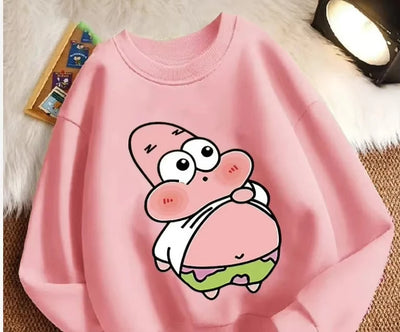
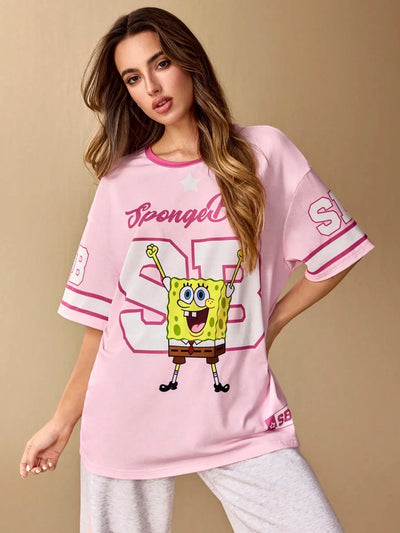
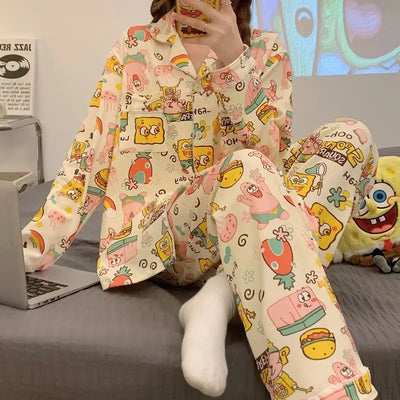
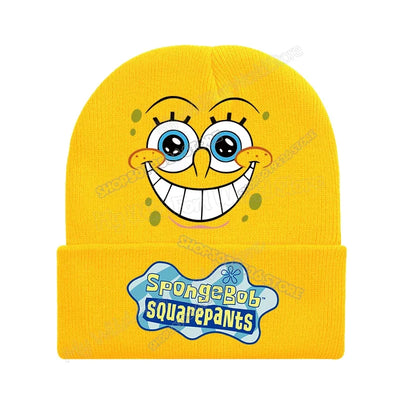
The character has generated a commercial empire estimated at over 13 billion dollars, including merchandise, films, Broadway musicals, and even a theme park. SpongeBob T-shirts and other clothing have become streetwear fashion items proudly worn by adults worldwide.
Memes and Internet Culture
SpongeBob SquarePants is one of the most "memed" characters on the internet. Screenshots from the series are used daily on social media to express emotions, situations, or social commentary. "Mocking SpongeBob," "Imagination SpongeBob," and "Primitive Sponge" have become universal meme formats.
This massive presence in internet culture has allowed SpongeBob to remain relevant with new generations, even 25 years after his creation. The character has transcended his original medium to become a visual language shared by millions of people online.
A Timeless Message of Optimism
Beyond entertainment, SpongeBob SquarePants carries a deeply positive message: optimism, perseverance, and kindness are worth it. In an often cynical world, SpongeBob reminds us that it's possible to choose joy, find meaning in our work, and maintain authentic friendships.
This message has resonated particularly strongly during difficult times. Many adult fans have shared that rewatching SpongeBob helped them through periods of depression or anxiety. The character offers an emotional comfort that is rare in modern popular culture.
🎭 Did you know?
In 2019, the musical "SpongeBob SquarePants: The Broadway Musical" was nominated for 12 Tony Awards (the Oscars of American theater). The production proved that SpongeBob could work in every artistic medium.
🛒 Our SpongeBob Collection
Clothing, accessories, and merchandise for all fans of Bikini Bottom
❓ FAQ — SpongeBob SquarePants
❓ How old is SpongeBob really?
SpongeBob is officially an adult who works and lives on his own, but his exact age is never specified in the series. According to his driver's license shown in some episodes, he was born on July 14, 1986, which would make him around 38 years old in 2026. However, this information has varied across episodes and is not considered strict canon. Stephen Hillenburg always refused to give a definitive age, preferring SpongeBob to remain timeless.
❓ Why does SpongeBob live in a pineapple?
Stephen Hillenburg explained that the choice of a pineapple house was both aesthetic and symbolic. Visually, a pineapple underwater is immediately recognizable and surreal, perfectly suited to the show's absurd universe. Additionally, a pineapple represents something tropical, exotic, and joyful — exactly like SpongeBob's personality. In the first episode, we learn that the house was originally a pineapple that fell off a ship and simply took root at the bottom of the ocean.
❓ What is the real Krabby Patty secret formula?
The secret Krabby Patty formula has never been officially revealed in the series — it's a deliberately preserved mystery that fuels many storylines. In the episode "Just One Bite," a list of ingredients appears briefly but remains unreadable. Stephen Hillenburg confirmed the recipe would never be revealed because the mystery is an integral part of the show's magic. Some fans theorize that the "crab" in Krabby Patty is real crab, which would explain why Mr. Krabs (himself a crab) guards the recipe so jealously.
❓ Why does Gary meow instead of making snail sounds?
Gary meows because he fills the role of a cat-like pet in the show's dynamic. Stephen Hillenburg wanted to create a familiar owner-pet relationship for viewers, and a cat's meow is universally recognizable. This decision also creates a humorous contrast: Gary is a sea snail who behaves like a land cat, fitting perfectly with the general absurdity of SpongeBob SquarePants.
❓ Are SpongeBob and Patrick more than just friends?
Stephen Hillenburg and the creative team always presented SpongeBob and Patrick as platonic best friends whose relationship represents pure, innocent friendship. Hillenburg publicly stated that SpongeBob was "asexual like a real sea sponge" and that the show celebrated unconditional friendship rather than romantic relationships. Their friendship is a model of loyalty, acceptance, and mutual support with no romantic undertones whatsoever.
📚 Articles You Might Also Like
🛒 Our SpongeBob Collection
Bundle Box Fan Junior | Bundle Box Fan Ultime | SpongeBob Figure - Squidward Articulated | LEGO Nanobloc SpongeBob Figure - Bob